posted by naduvilmadam at
7:46 AM
|
0 Comments


The Hindu : Sci-Tech / Internet : Now, Google worth one billion page views a day: "- Sent using Google Toolbar"
posted by naduvilmadam at
3:35 PM
|
0 Comments
SIT BACK, RELAX
& ENJOY !
Facts about India !
Part -2
India's
Civilized Past
IndiaIndia never invaded any country in her last 10,000 years of history.
It is the only society in the world which has never known slavery.
India was the richest country on Earth until the time of the British in the early 17th Century
Robert Clive’s personal wealth amassed from the blunder of Bengal during 1750’s was estimated at around £401,102
It has been estimated that the total amount of treasure that the British looted from India had already reached £1,000,000,
Taking into consideration interest rates and inflation
this would be worth close to $1,000,000,000,000
($1Trillion) in real-terms today.
Indus & Saraswati Civilizations
Rise of Jainism and Buddhism
Mauryan Period
Golden Age of Indian Arts & Sciences
Muslim Invasions
The Mughal Empire
Portuguese Invasion
The British East-India Company
The British Empire
India's Freedom Struggle
Independence
Modern India 2020 Vision
A Brief History of Time
Hindi
Sanskrit
Tamil
Gujarati
Urdu
Punjabi
Malayalam
Bengali
Marathi
Konkani
Kannada
Assamese
Telegu
Oriya
Rajasthani
Sindhi
The Vedas are the oldest written text on our planet today.
They date back to the beginning of Indian civilization and
are the earliest literary records of the human mind.
They have been passed through oral tradition for over
10,000 years, and first appeared
in written form between 2500 - 5,000 years ago.
Veda means “Knowledge” in Sanskrit.
>
The Ancient Vedic Hymns
Rig Veda - Knowledge of Hymns, 10,859 verses
“There is only one truth, only men describe it in different ways.“
Yajur Veda - Knowledge of Liturgy, 3,988 verses
Sama Veda - Knowledge of Classical Music, 1,549 verses
Ayur Veda - Knowledge of Medicine, over 100,000 verses
Upanishads
Jyotisha – Astrology and Astronomy.
Kalpa – Rituals and Legal matters.
Siksha – Phonetics.
Aitareya – Creation of the Universe, Man and Evolution.
Chandogya – Reincarnation, Soul.
Kaushitaki – Karma.
Kena – Austerity, Work, and Restraint.
Dharnur Veda – Science of Archery and War.
Mundaka – Discipline, Faith and warning of Ignorance.
Sulba Sutra – Knowledge of Mathematics
Yoga Sutra - Knowledge of Meditation
Kama Sutra - Knowledge of Love and Sex
Please click to advance >
Sanskrit (संस्कृत )
Sanskrit was the classical language of India, older than
Hebrew and Latin.
It is the oldest, most scientific, systematic
Sanskrit literally means “refined” or “perfected”
'measuring the earth’
'measuring triangular forms‘
‘first person pronoun’
‘the same’
mother
papa / father
brother
sister
geometry
trigonometry
door
me
name
smile
equal
matar
pitar
bhratar
svasar
gyaamti
trikonamiti
dvaar
ma
naman
smi
eka
Sanskrit meaning
English meaning
Sanskrit word
Please click to advance >
India
Please click to advance >
Similarities to Greek mythology
Hercules (Herakles) fighting the Lernaean Hydra
Krishna (Harekrsna) fighting the Kaliya Serpent
Please click to advance >
Similarities to Greek mythology
Dionysus (Dionysos) holding a Trident
Shiva, holding the Trident, resting on a leopard skin with a Cobra perched beside him, his abode is Mount Kailas, Himalayas
Dionysus (Dionysos) encircled with a snake, with leopard by his side, with the moon in the background, his abode is Mount Olympus
Please click to advance >
Similarities to Biblical mythology
The ancient Vedic Aryan Hindus (Indus Saraswati) spoke about a
series of Ten Pitris who ruled before the global Flood.
Ancient Babylonian legend speaks of a pre-Flood series of ten kings.
The ancient Egyptians described Ten Shining Ones who ruled consecutively
before the Deluge.
The last of these kings in the aforementioned lists was the hero who led seven
others aboard a vessel in which they survived the global Flood.
In ancient India, the hero was Manu who survived the global-Flood
"pralaya" with the Seven Rishis.
In ancient Babylon, the hero's name was Zisudra who spear-headed the survival
on the Ark of seven other humans, the Seven Apkallu.
In ancient Egypt, the Flood hero was Toth who survived the Deluge along
with the Seven Sages.
Please click to advance >
Did the Vedic Aryans travel as far as Easter Island?
The Easter Islands located in the Pacific Ocean, were situated far away from any civilization.
The craftsmanship of these islands corresponds
to the one of the ancient Incas.
The sign script of the Easter Islands almost
equals the ancient scripts of Indus Valley.
Easter Island
symbols
Indus Saraswati
symbols
Were the Ancient Vedic
Trans-Oceanic seafarers?
Please click to advance >
The Surya Siddhanta,
A textbook on astronomy of ancient India,
last compiled in 1000 BC, believed to be handed down from 3000 BC by aid of complex mnemonic recital methods still known today.
Showed the Earth's diameter to be 7,840 miles,
compared to modern measurements of 7,926.7 miles.
Showed the distance between the Earth and the Moon as 253,000 miles,
Compared to modern measurements of 252,710 miles.
Brahmagupta, 630 A.D., said, the following about Gravity,
“Bodies fall towards the earth as it is in the nature of the earth
to attract bodies, just as it is in the nature of water to flow".
India
Kerala, South India, guardians of the origins of modern martial-arts,
influenced by Yoga and connected to the ancient Indian sciences of war (dhanur-veda) and medicine (ayur-veda).
The origin of kung-fu begins with the legend of a monk named Bodhidharma (also known as Ta Mo) who travelled from India to China around 500 A.D.
Bharata Natyam
Odissi
Mohini Attam
Kuchipudi
Kathakali
Classical Dance forms
India's ancient achievements in Medical Science
20th Century
Yogsootra Cunavidhi
Definition of Sleep Prashna-Upanishad
Bose, 19th Century
Mahabharat
Life in trees and plants
19th – 20th Century
Upanishad
16 Functions of the Brain Eitereya
Haneman, 18th Century
S-Bhagwat (1-5-33)
A material producing a disease can prevent or cure the disease in minute quantity
20th Century
Mahabharat
Developing Embyro in Vitro
(Mahabharat)(5500 BCE)
Mahabharat
Eitereya Upanishad (6000 BCE)
Shrimad Bhagwat
Shrimad Bhagwat
Mahabharat
Mahabharat
Heart Eitereya Upanishad -(6000 BCE)
RigVed
Shrimad Bhagwat
Mahabharat (5500 BCE)
RigVed (1-116-15)
Ancient Reference
20th Century
Cell Division (in 3 layers)
19th Century
Embryology
18th Century
Micro-organisms
Not yet
Elongation of Life in confirmed Space Travel
Not possible yet
Not possible yet
Test Tube Babies ( from the ovum only)
Test Tube Babies ( from the sperm only)
1860 – 1910 A.D.
Chromosomes
20th Century
Parthenogenesis
Robinson, 1972
Beginning of the Foetal
Labyrinth
Analysis of Ears
20th Century
Combination of Male and Female
1890 A.D.
Number of Chromosomes (23)
20th Century
Artificial Limb
Modern Reference
Knowledge
1800 A.D.
Shrimad Bhagwat (4000 B.C.)
Atom (Divisible) & (Indivisible)
----
RigVed,Ramayana,Samarangan Sutradhara (1050 A.D.)
Aeroplanes
----
Samarangan Sutradhara (1050 A.D.)
Robot
----
Valmiki Ramayan (7300 B.C)
Entry in South America by Aeroplanes
1960 A.D.
Valmiki Ramayan (7300 B.C)
Phosphorescent Trident at the Bay of Pisco, Peru, S.America
RigVed (23720 B.C)
Eitereya Upanishad (6000 BCE)
Vishvaruchi(Mundakopanishad)
Spullingini (Mundakopanishad)
Manojava (Mundakopanishad) Sudarshan,
Sulohita (M.U)
Sudhumravarna - (Mundakopanishad - M.U)
(6000 B.C) Shankaracharya (500 B.C)
Shrimad Bhagwat (4000 BC)
Mahabharat (5500 BC)
RigVed - Sayan Bhashya (1400 A.D)
Ancient Reference
20th Century
Black Holes
19th Century
Embryology
----
Monsoon at Summer Solstice
20th Century
Nuclear Energy
1968
Tachyons faster than light
----
Infra-Red Band
----
Ultraviolet Band
17th Century
Gravitational Force (Prashnopanishad)
Under trials
Space Travel to another solar system
17-19th Century
Trans-Saturnean Planets
19th Century
Velocity of Light
Modern Reference
Knowledge
“abode of snow” – in Sanskrit
The Beauty of KashmirWestern Thar Desert, Rajasthan
“Gods blessed region”, Kerala1 Billion people, 1 Billion Deities !
Rama
Ganesha
Saraswati
Lakshmi
Nanak
Buddha
Christ
Devi
Krsna
Murugan
Destroyer
Shiva
Preserver
Vishnu
Creator
Brahman
The Trinity
The Ancient Indian Epics
Ramayana
Mahabharata
Longest Epic in world literature with 100,000 two-line stanzas, first composed about 5000 years ago.
The first Indian epic consisting of 24,000 verses divided into 7 books, composed about 6500 years ago.
Please click to advance >
“After many births the wise seek refuge in me, seeing me everywhere and in everything. Such great souls are very rare.”
"Your very nature will drive you to fight, the only choice is what to fight against.”
“On action alone be your interest, Never on its fruits.
Let not the fruits of action be your motive,
Nor be thy attachment to inaction. “
“This is how actions were done by the ancient seekers of freedom; follow their example: act, surrendering the fruits of action.”
“For certain is death for the born,
and certain is birth for the dead;
Therefore over the inevitable you should not grieve. “
“For the uncontrolled there is no wisdom. For the uncontrolled there is no concentration, and for him without concentration, there is no peace. And for the unpeaceful how can there ever be happiness? “
“When a man dwells on the objects of sense, he creates an attraction for them; attraction develops into desire, and desire breeds anger.“
The words of Lord Krishna in the Bhagavad Gita.
Lord Krsna counsels Prince Arjuna during the Great Mahabharata War, in Kurukshetra, India, circa 3100 B.C.,
The 4 kinetic ideas behind Hindu Vedic
Karma
Maya
Nirvana
Yoga
The law of universal causality, which connects man with the cosmos and condemns him to transmigrate.
The world is not simply what it seems to the human senses.
Absolute reality, situated somewhere beyond the cosmic illusion woven by Maya and beyond human experience as conditioned by Karma.
The state of absolute blessedness,
Implies integration; bringing all the faculties of the psyche under the control of the self
Please click to advance >
is the Sanskrit word for;
Amen (Christian)
Amin (Muslim)
Aum (Hindu)
Hūm (Bhuddist)
“AUM” or “OM”
The first sound of the Almighty – Infinite Reality - Oneness with the supreme
posted by naduvilmadam at
2:57 AM
|
0 Comments
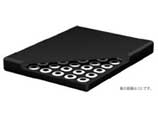
http://web-japan.org/trends/
A Japanese startup company is tapping into a new energy source, generating both electricity and hope that it could contribute to the battle against global warming. The company's flagship product works by converting physical pressure into electricity and has a wide range of potential applications.
posted by naduvilmadam at
4:30 AM
|
0 Comments
In Bihar, electricity is produced from rice husk - SiliconIndia: "- Sent using Google Toolbar"
posted by naduvilmadam at
6:15 PM
|
0 Comments
The Hindu : Sci-Tech / Energy & Environment : Solar plane takes off for 24-hour test flight: "- Sent using Google Toolbar"
posted by naduvilmadam at
11:15 PM
|
0 Comments
Just as the national bird of Kerala is the Mosquito, her national dress is the 'Lungi'. Pronounced as 'Lu' as in loo and 'ngi ' as in 'mongey', a lungi can be identified by its floral or window-curtain pattern. The 'Mundu' is the white variation of lungi and is worn on special occasions like hartal or bandh days, weddings and Onam.
The Lungi is simple and 'down to earth' like the mallu wearing it. It is the beginning and the end of evolution in its category. Wearing something on the top half of your body is optional when you are wearing a lungi. The Lungi is a strategic dress. It's like a one-size-fits- all bottoms for Keralites.
The technique of wearing a lungi/mundu is passed on from generation to generation through word of mouth like the British Constitution. If you think it is an easy wearing it, just try it once! It requires techniques like breath control and yoga that is a notch higher than the Sudarshan kriya of AOL. A lungi/mundu when perfectly worn won't come off even iin a severe quake of 8 on the Richter scale. A lungi is not attached to the waist using duct tape, staples, ropes or velcro. It's a bit of mallu magic whose formula is a closely guarded secret, like the formula of CocaCola (of course, we do not want any of their factories in God's own Country, do we?)
A lungi can be worn 'Full Mast' or 'Half Mast' like a national flag. A 'Full Mast' lungi is when you are showing respect to an elderly or the dead. Wearing it at full mast has lots of disadvantages. A major disadvantage is when a dog runs after you. When you are wearing a lungi/mundu at full mast, the advantage is mainly for the female onlookers who are spared the ordeal of swooning at the sight of skinny, but very hairylegs.
Wearing a lungi 'Half Mast' is when you wear it exposing yourself like those C grade movie starlets. A mallu can play cricket, football or simbly run when the lungi is worn at half mast. A mallu can evenclimb a coconut tree wearing lungi in half mast. "It's not good manners, especially for ladies from decent families, to look up at a mallu climbing a coconut tree"- Confucius (or was it Kunjan Nambiar?)
Most mallus do the traditional dance kudiyattam (short form of Koodiyattam).
Kudi means drinking alcohol and yattam, spelled as aattam, means random movement of the male body. Note that 'y' is silent. When you are drinking, you drink, there is no 'y'(why?) . Any alcohol related "festival" can be enjoyed to the maximum when you are topless with lungi and a towel tied around the head. "Half mast lungi makes it easy to dance and shake legs" says Candelaria Amaranto, a Salsa teacher from Spain after watching' ‘ kudiyaattam' .
The 'Lungi Wearing Mallu Union' [LUWMU, pronounced LOVE MU], an NGO which works towards the 'upliftment' of the lungi, strongly disapprove of the GenNext tendency of wearing Bermudas under the lungi. Bermudas under the lungi is a conspiracy by the CIA. Keralites who believe in Marxism should strongly denounce it! It's a disgrace to see a person wearing Bermudas with corporate logos under his lungi. What they don't know is how much these corporates are limiting their freedom of movement and expression.
A mallu wears the lungi round the year, in all weather and any season. A mallu celebrates winter by wearing a colourful lungi with a phosphorescent pink swirly pattern. The Lungi provides good ventilation and brings down the heat between the legs. As we all know, a mallu is scared of global warming more than anyone else inthe world.
A lungi/mundu can be worn any time of the day/night. It doubles as a blanket at night. It is also a swing, swimwear, sleeping bag, parachute, facemask while entering/exiting toddy shops, shopping basket and water filter while fishing in ponds and rivers. It also has recreational uses like in 'Lungi/mundu pulling', a pastime in households having more than one male member. Lungi pulling competitions are held outside toddy shops all over Kerala during Onam and Vishu.
When these lungis are decommissioned from service, they become table cloths. Thus the humble lungi accompanies the Mallu through the ups and downs of life. Or all throughout the life of a true blue Mallu!
(An anonymous piece)
posted by naduvilmadam at
5:38 PM
|
0 Comments
I thought you would be interested in this article:http://sports.in.msn.
posted by naduvilmadam at
5:34 PM
|
0 Comments
Not knowing this may leave a big hole in your pocket. Information you should have:
If you are getting caught quite often by traffic police, then please read on. From now onwards, the Traffic Police cannot catch a motorist just to examine the driving license or vehicle documents. They can catch you only if you have violated any traffic laws or if you are driving drunk.
Remember that when caught for traffic violation, the fine you pay must be limited to the violation. In other words, the police can't bloat the bill saying that you have no insurance cover or emission certificate, etc.
Many motorists do not know this. According to the law, no policeman can slap a penalty on you just because you have no insurance or emission certificate. If you have not purchased insurance cover for your vehicle, then the police officer must issue a notice, not impose penalty. You must be given 15 days' time to purchase insurance cover and one week for obtaining the emission certificate. Days later, meet the sub-inspector at his station with the insurance cover or emission certificate, so that he will annul the charge at once. Police can fine you only if you fail to produce these documents within the stipulated period. If your vehicle is brand new, then you need not bother about obtaining the emission certificate for one full year.
In response to a question as to why policemen fine people instantly without giving them time to obtain insurance cover or emission certificate, Additional Commissioner for Traffic Praveen Sood said, "Yes, it is a mistake. People must force policemen to issue notice or complain to me at least the following day.
The best way to teach the police a lesson is by filing a written complaint with their higher officials and, a week later, using the Right to Information Act (RTI) to know the action taken against them.
Remember, any question or application filed under RTI cannot be ignored and no official is bold enough to ignore the RTI Act.
(Praveen Sood - Additional Commissioner for Traffic – 022 - 22942276.)
posted by naduvilmadam at
5:32 PM
|
0 Comments

Going from a structured work schedule into retirement is a big adjustment.Our days go from being goal-oriented and disciplined to being open and relaxed. Sounds great? Yes, it is, but here are some ways to adjust to the changes. Accordingly, with the ample time at my disposal, I have ventured into creating blog entitled www.techninform.blogspot.com. When I first started this adventure, I thought it would be a fun idea and an interesting experience to create a blog. It never occurred to me that I would be doing a blog and having so many of my friends tuning in to see the content unfold. Thank you for your support and good wishes. I look forward to seeing how things turn out. It should be a wild ride. I can’t wait to hear from you all. Whatever your opinion, my endeavor will be fulfilled if you like the blog and share with others too. I feel age is no bar for learning new things specially today's computer age.

Subscribe to
Comments [Atom]
